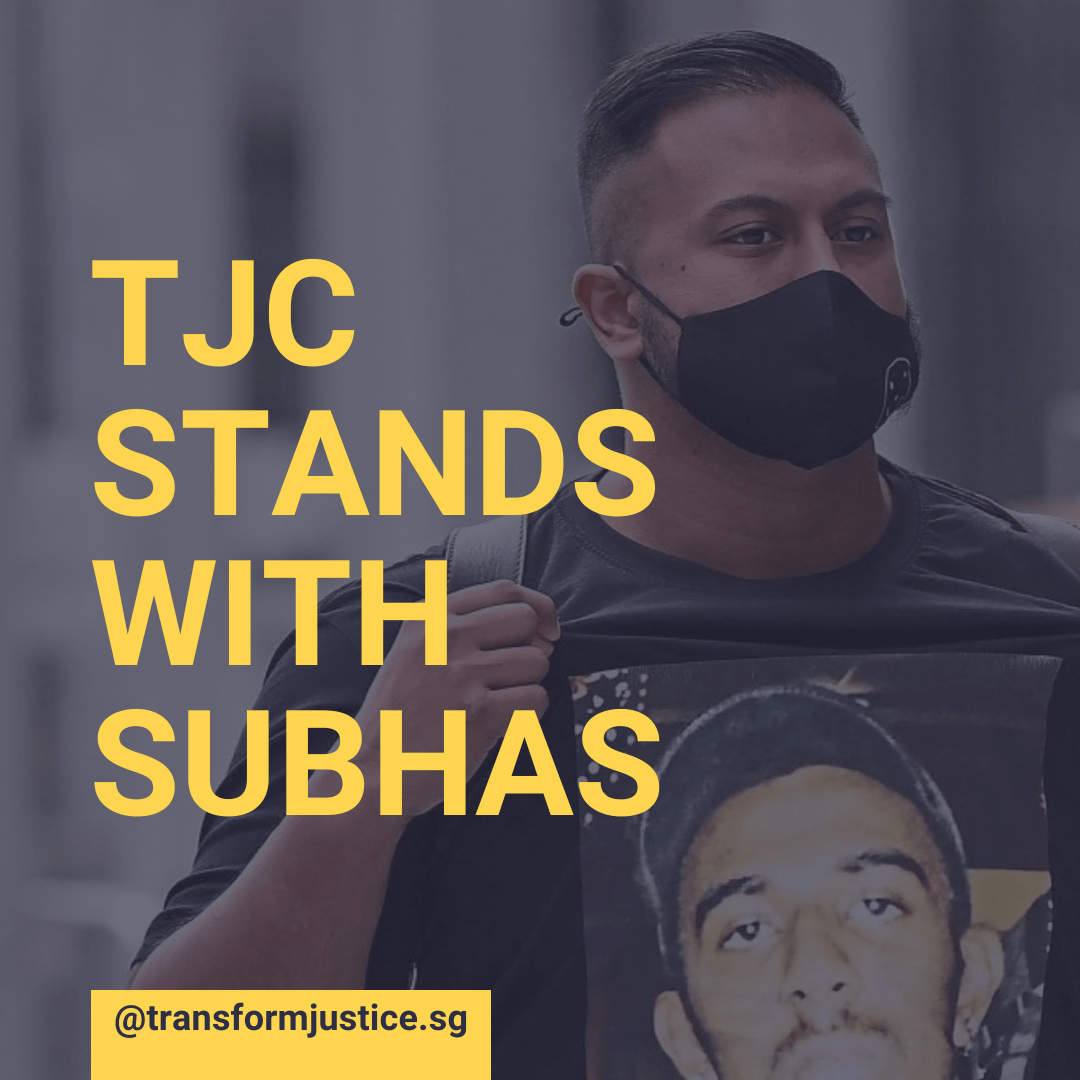
On 5 Sep 2023, Subhas Nair was sentenced to 6 weeks in jail for “attempting to promote ill will between different racial groups”. His sentencing not only has a profound impact on future conversations that Singaporeans will have around race and racism, it is also a solemn reminder of the state’s continued bullying of its critics.
When unjust laws are used to criminalise and silence legitimate opinions around race and religion, it limits the depth and authenticity of our race relations; it robs us of the confidence to have skilful conversations around important and often uncomfortable topics surrounding racial justice.
The nanny state continues to insist on only superficial, performative expressions of “racial harmony” that align with the current racial order in Singapore – these mask deep undercurrents of discrimination, alienation and pain in ethnic minority communities.
Any law that seeks to regulate speech around race and religion should have a protective impulse towards the most marginalised and minoritised groups, rather than be utilised to punish minorities who speak up against racial oppression.
Many of Subhas’ criticisms were directed at the state and its systems, rather than at individuals of any particular race. Many have pointed out the contrast between how Subhas’ actions are being punished, versus the case where a Chinese man who posted repeatedly about wanting to commit genocide and gun down Muslims received probation. Compared to attacks against a person or a community, the law should have a much higher threshold for critique of powerful systems. Instead, here, what we see is a particular oversensitivity to criticism of institutions like the police, which the people have both the right and responsibility to scrutinise closely.
As a minority artist and activist who has passionately advocated for the rights of migrant workers and other marginalised communities – including minorities on death row – Subhas’ prosecution will only deepen the exclusion and silencing of minorities. Such an aggressive response from the state, while claiming to protect us from ill-will between racial groups, in fact may build up even more fear, grievance and resentment among members of minority communities who have echoed many of Subhas’ concerns and feel that his conviction and sentence are unjust. Such resentment will only put race relations in further danger, rather than protect them.
We must remember that the state can only punish individuals on unjust grounds as long as the public allows it. We must speak out to reject such prosecutions, and make clear we don’t want such repression carried out in our name.
 Transformative Justice Collective