
Drugs aren’t just something we can die from, it’s something that most — if not all — of us can’t live without. Why do we take drugs? What determines if a drug is legal or illegal? Why are some kinds of drug use so normalised, while others are intensely stigmatised? Is using drugs, or even relying on them (think insulin, which so many people rely on to stay alive!) always a bad thing? This Global Day of Action for #SupportDontPunish, let’s go back to the basics.
What are drugs?
A drug is a chemical that interacts with proteins in the body to affect a physiological or psychological function.
Different chemicals react with different receptors in our cells, triggering different responses in our bodies.
We take different kinds of drugs to deal with the physiological demands of life. For example, we might drink alcohol while unwinding with friends, take paracetamol to deal with a headache, or need a cup of coffee in the morning to be able to meet the day ahead.
It’d actually be unusual if you weren’t taking any drugs at all.
Let’s look at some common drugs of choice (D.O.C.)
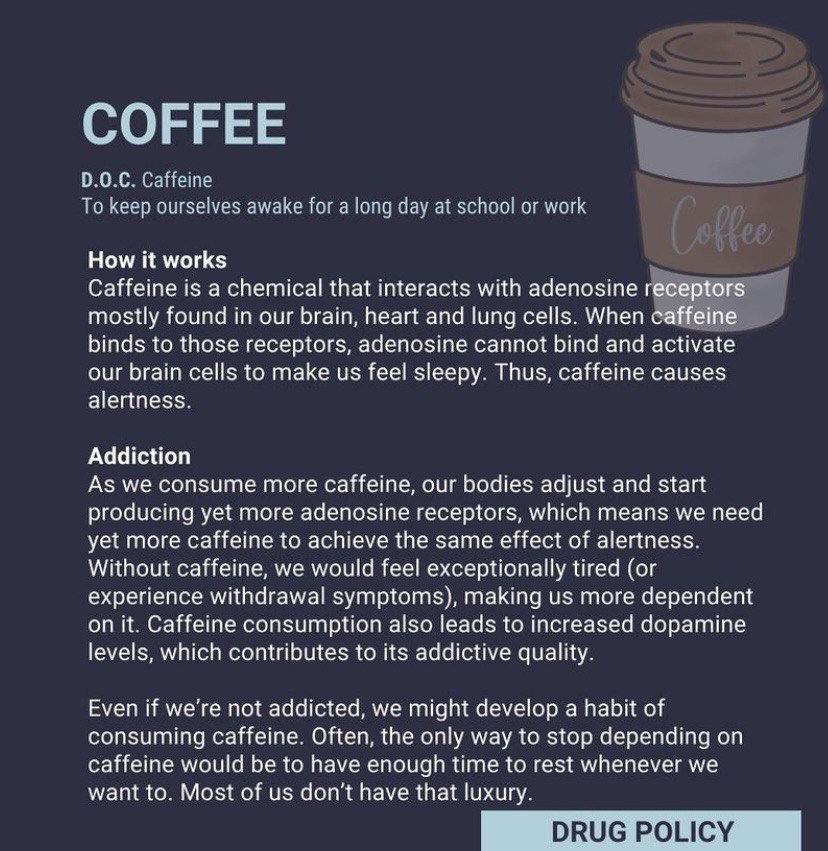
Coffee

How it works
Caffeine is a chemical that interacts with adenosine receptors mostly found in our brain, heart and lung cells. When caffeine binds to those receptors, adenosine cannot bind and activate our brain cells to make us feel sleepy. Thus, caffeine causes alertness.
Addiction
as we consume more caffeine, out bodies adjust and start producing yet more adenosine receptors, which means we need yet more caffeine to achieve the same effect of alertness. Without caffeine, we would feel exceptionally tired (or experience withdrawal symptoms), making us more dependent on it. Caffeine consumption also leads to increased dopamine levels, which contributes to its addictive quality.
Even if we’re not addicted, we might develop a habit of consuming caffeine. Often, the only way to stop depending on caffeine would be to have enough time to rest whenever we want to. Most of us don’t have that luxury.
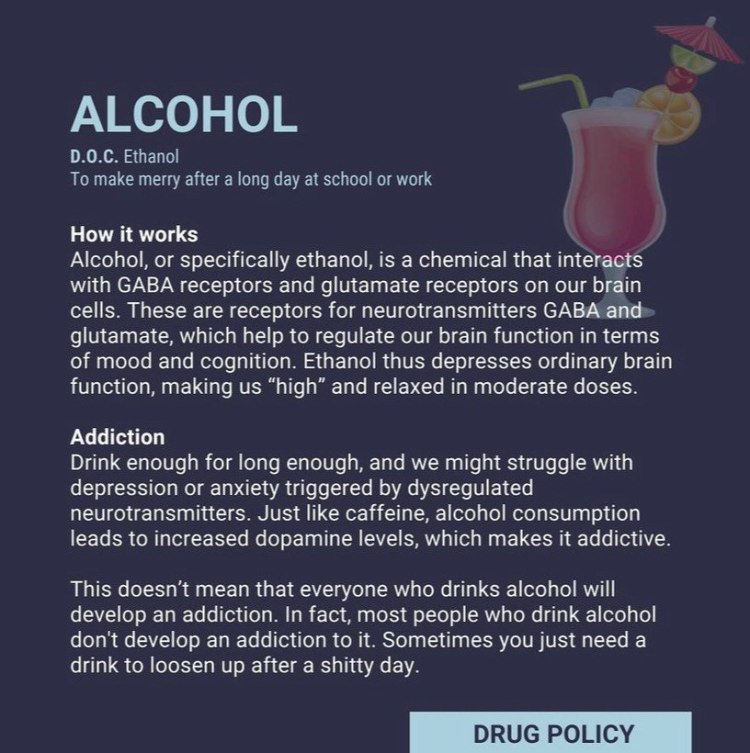
Alcohol
How it works
Alcohol, or specifically ethanol, is a chemical that interacts with GABA receptors and glutamate receptors on out brain cells. These are receptors for neurotransmitters GABA and glutamate, which help to regulate our brain function in terms of mood and cognition. Ethanol thus depresses ordinary brain function, making us “high” and relaxed in moderate doses.
Addiction
Drink enough for long enough, and we might struggle with depression or anxiety triggered by dysregulated neurotransmitters. Just like caffeine, alcohol consumption leads to increased dopamine levels, which makes it addictive.
This doesn’t mean that everyone who drinks alcohol will develop an addiction. In fact, most people who drink alcohol don’t develop an addiction to it. Sometimes you just need a drink to loosen up after a shitty day.
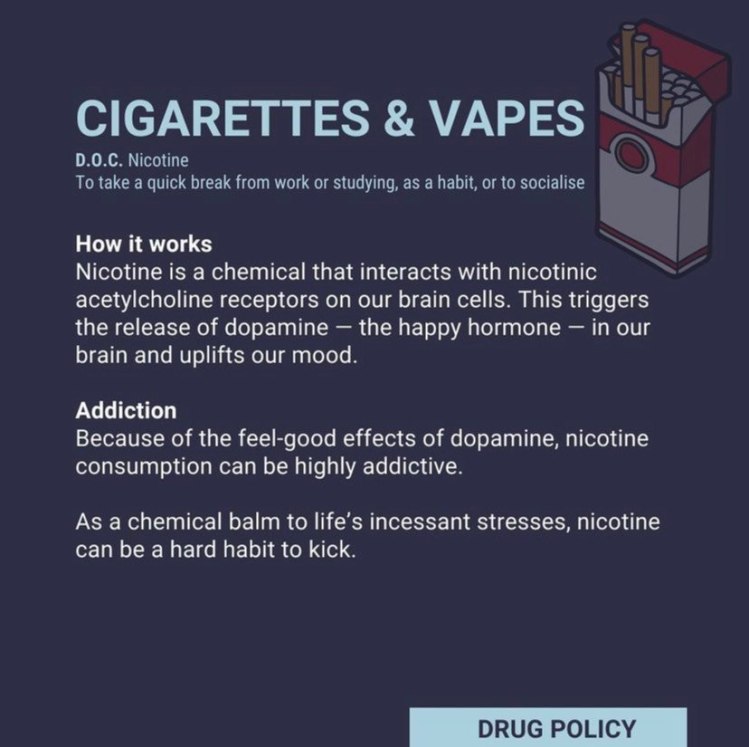
Cigarettes & Vapes
How it works
Nicotine is a chemical that interacts with nicotinic acetylcholine receptors on our brain cells. This triggers the release of dopamine – the happy hormone – in our brain and uplifts our mood.
Addiction
Because of the feel-good effects of dopamine, nicotine consumption can be highly addictive. As a chemical balm to life’s incessant stresses, nicotine can be a hard habit to kick.
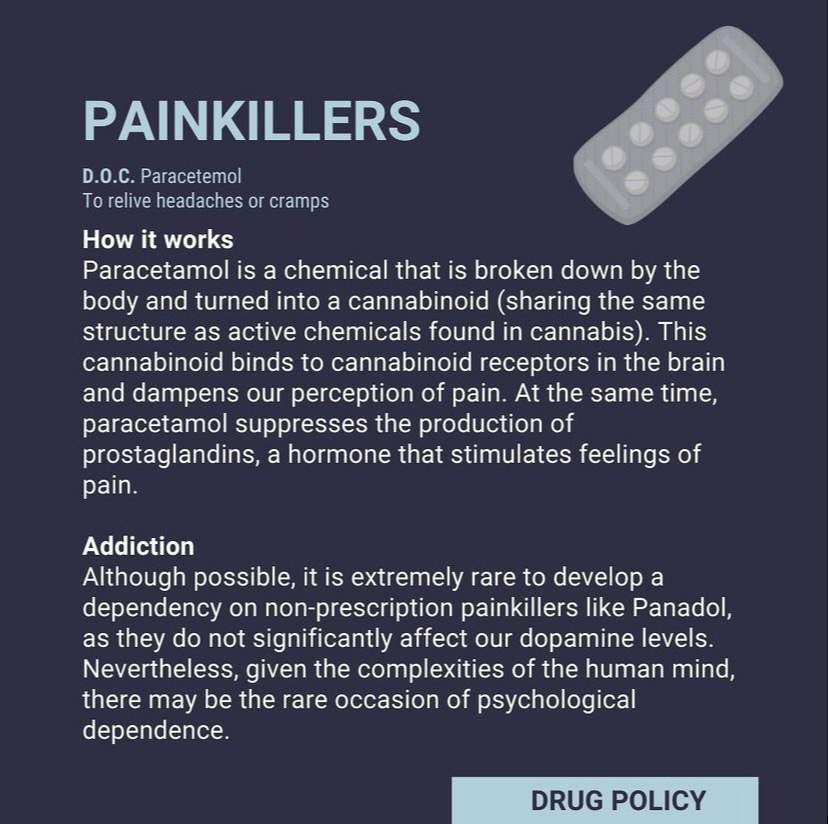
Painkillers
How it works
Paracetamol is a chemical that is broken down by the body and turned into a cannabinoid (sharing the same structure as active chemicals found in cannabis). This cannabinoid binds to cannabinoid receptors in the brain and dampens our perception of pain. At the same time, paracetamol suppresses the production of prostaglandins, a hormone that stimulates feelings of pain.
Addiction
Although possible, it is extremely rare to develop a dependency on non-prescription painkillers like Panadol, as they do not significantly affect our dopamine levels. Nevertheless, given the complexities of the human mind, there may be the rare occasion of psychological dependence.
Sugar
How it works
Sugar can be converted into glucose within minutes – this quick change can cause high blood pressure, a raised heart rate and increased mental awareness. Sugar affects various organs in our body in an incredible number of ways, many of which can be harmful in the long-term, especially if sugar intake is excessive. The American Heart Association claims that sugary soft drinks are responsible for 180,000 deaths worldwide annually.
Addiction
Any substance that gives us pleasure can be an addiction – this includes sugar. Sugar releases opioids and dopamine. Research shows that sugar works much like many addictive drugs in that is affects the brain’s limbic system, the part of the brain that’s associated with emotional control. Sugar addiction has been demonstrated in numerous studies that looked at components like bingeing, withdrawal and cravings.
How can we reduce the harms of drugs, and increase safety, health and well-being for the maximum people?
When we think about “drugs”, we usually think about controlled drugs that are classified under Singapore’s Misuse of Drugs Act. This means we tend to associate drugs with crime or immorality.
But in reality, all of us seek out different drugs at different times.
Very often, we take drugs to feel better, physically or emotionally. Sometimes we all slip up a little, like drinking too much alcohol while out with friends. It’s just part of life.
Often, if our circumstances change, we realise we may not depend on these substances so heavily, or seek them out at all. If we consistently get a full 8 hours of sleep every night, for instance, we might one day find that we don’t need coffee so much anymore. We stop taking paracetamol pills once our headache subsides.
Drugs can be beneficial to our physical and mental health, as well as harmful. This depends on the drug, and how, when, how much, in what combination, and how often we use it.
Many legal drugs share similarities with illicit drugs, in terms of the effect they have on us.
Whether or not a drug is prohibited (e.g. cannabis), somewhat regulated (e.g. cigarettes/alcohol) or sold freely (e.g. coffee) tends to be based on a combination of political, economic, historical, cultural and other factors. It’s not just about how dangerous the drug is. In fact, sometimes, it has nothing to do what that!
To give one example, opium used to be considered a prestigious gift and profitable trade once upon a time, in Singapore. Now it is a Class A scheduled drug that attracts the death penalty.
History shows us that drugs – whether legal or illegal – are here to stay. There is no such thing as a drug-free society.
As long as drugs meet human needs, they’ll be around. The question is: how can we reduce the harms of drugs, and increase safety, health and well-being for the maximum people?
One important step is addressing the intense stigma and harsh punishment that drugs attracts in Singapore, so that people who use drugs can seek the information, healthcare and resources they need to keep themselves safer.
Sources:
- “Drug.” Britannica. https://www.britannica.com/science/drug-chemical-agent. Accessed 23 May 2023.
- Cappelletti, Simone et al. “Caffeine: Cognitive or Physical Performance Enhance or Psychoactive Drug?” Current Neuropharmacology, vol. 13, no. 1, Jan 2015. doi: 10.2174/1570159X13666141210215655.
- Volkow, N. D. et al. “Caffeine increases striatal dopamine D2/D3 receptor availability in the human brain” Translational Psychiatry, vol. 5, no. 4, Apr 2015. doi: 10.1038/tp.2015.46.
- Banerjee, Niladri. “Neurotransmitters in alcoholism: A review of neurobiological and genetic studies” Indian Journal of Human Genetics, vol. 20, no. 1, pp20-31. doi: 10.4103/0971-6866.132750
- Benowitz, Neal L. “Pharmacology of Nicotine: Addiction, Smoking-Induced Disease, and Therapeutics” Annual Review of Pharmacology and Toxicology, vol. 49, pp 57-71, Sep 2010. doi: 10.1146/annurev.pharmtox.48.113006.094742.
- Bertolini, Algio et al. “Paracetamol: new vistas of an old drug” CNS Drug Reviews, vol. 12, no. 3-4, pp250-275. doi: 10.1111/j.1527-3458.2006.00250.x.
- Smith, Yolanda. “Insulin’s Role in the Human Body” News Medical. https://www.news-medical.net/health/Insulins-role-in-the-human-body.aspx. Accessed 26 May 2023.
 Transformative Justice Collective