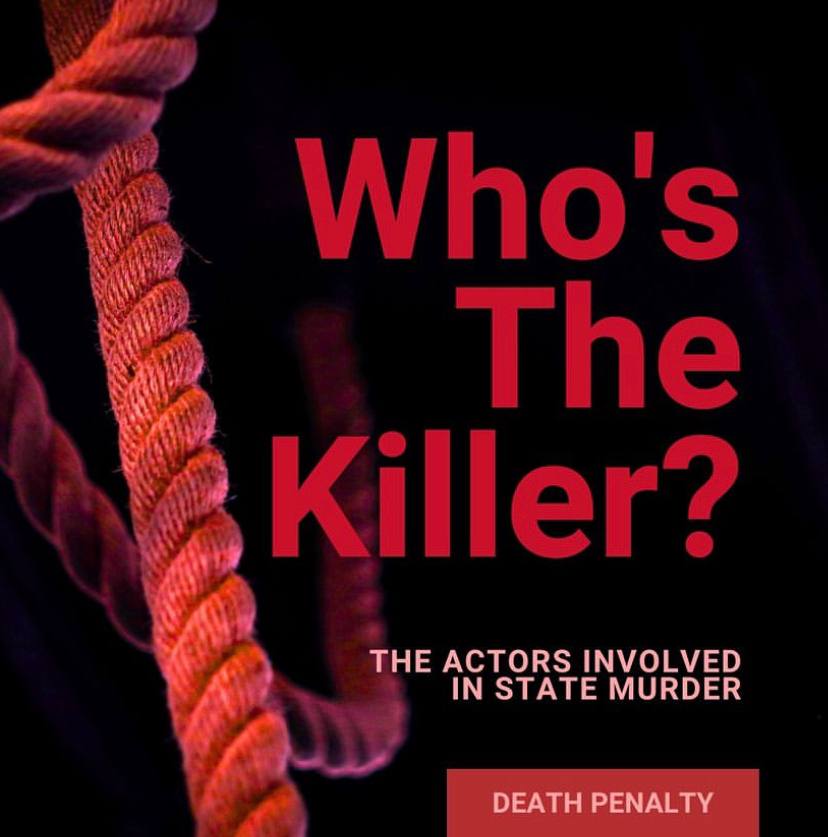
There are many actors involved with the decision to hang someone to death in Singapore, and with carrying out the death sentence. So whose hands have blood on them? Let’s find out.
After the conclusion of CNB/police investigation, the Attorney General’s Chambers (AGC) – who are the state’s lawyers – decides whether to prosecute, and what to prosecute someone for. That includes deciding whether to offer plea bargains, amend charges to below the mandatory death penalty amounts, and so on. For example, while trafficking 500g of cannabis or more attracts the mandatory death penalty, the AGC can decide to charge someone with trafficking 499g, even if they were found with more. They have complete discretion on when and why they do this, and don’t have to explain these decisions to anyone.
If convicted of trafficking a capital amount of drugs, the person faces the mandatory death penalty, unless two conditions are met:
(1) The judge finds that the convicted person proved, on a balance of probabilities, that they were merely a courier, without higher-order involvement in the drug trafficking operation.
(2) The person either receives a Certificate of Substantive Assistance (CSA) from the Public Prosecutor (a function played by the AGC), confirming that the accused person has substantively assisted the CNB in disrupting drug trafficking activities, OR the convicted person proves that they were suffering from such an “abnormality of mind” that it impaired their mental responsibility for their acts. If both these conditions are met, the judge can exercise their discretion to impose life imprisonment and caning instead of the mandatory death penalty.
If, upon conviction, these conditions are not met, the judge proceeds to impose the mandatory death penalty. In court, when the sentence of death is passed, the person who is being sentenced has to stand while the judge pronounces that he or she must be hanged by the neck until he or she is dead.
If the Court of Appeal upholds their death sentence, the judge who first sentenced them, as well as the presiding judge who handled their appeal must send reports to the President, who will forward it to the Attorney-General. The AG will then send the Cabinet their opinion on the report, following which the Cabinet, which is led by the Prime Minister, would advise the President on whether or not to grant clemency. The President is required by law to act according to the Cabinet’s advice.
Documents detailing the case in further detail must also be sent to the Minister of Home Affairs by the judge who handled the person’s appeal.
Since 1965, Singapore Presidents have only granted clemency to a death row prisoner 6 times. The last clemency granted in Singapore was by President Ong Teng Cheong, to Mathavakannan s/o Kalimuthu, in 1998. Mathavakannan was convicted for murder. The Cabinet under PM Lee Hsien Loong has never directed the President to grant clemency for a death row prisoner.
If the Cabinet does not advise the President to grant clemency, the President issues an order stating the date, time and place of the execution, and sends it to the Court of Appeal. In doing so, the President must follow the decisions of the Cabinet (or a Minister acting under the authority of the Cabinet) on the time and place of the execution.
Upon receiving the President’s order, the Court of Appeal will issue a warrant from the Supreme Court signed by the Chief Justice or other presiding judge, which will set out the time and place of the person’s execution. This warrant is sent to the Commissioner of Prisons who must then carry out the execution.
The President can order a respite of the execution before it is carried out, and appoint some other time or place for the execution, but they can only do so in accordance with the Cabinet’s advice.
Under Singapore law, in addition to the executioner who carries out the sentence, the following people must be present during an execution:
(1) The superintendent of the prison
(2) A medical officer of the prison
(3) Any other prison officers that the Commissioner of Prisons requires
A prison religious counsellor, or anyone else the Commission of Prisoners decides is proper to admit, may also be allowed to be present.
Immediately after the death sentence is administered, a medical officer must examine the body of the person to confirm their death and sign a death certificate, which is then delivered to the Commissioner of Prisons.
Within 24 hours of the execution, a coroner must hold an inquiry to confirm the identity of the body and whether the execution was duly carried out. Copies of the coroner’s findings must be sent to and filed in the Registry of the Supreme Court as well the Minister of Home Affairs.
So, who’s the killer?
Many people – Parliamentarians who passed and keep the death penalty in the law, Cabinet Ministers, President, prosecutors, judges, the Commissioner of Prisons, the executioner, the superintendent of prison, medical officers, coroners – play a part in the state’s murder of our fellow people. We often describe the administration of state murder as a cold, inhumane bureaucracy, but we cannot forget that there are flesh-and-blood human beings who operate this machinery, where each step is deliberate, premeditated. Each of them is either directly responsible, or complicit in it.
Often we hear those who work to enforce cruel systems say, “I’m just doing my job”, especially when the cruelty is legalised. But they make a choice, each time, to participate in state violence and murder. They could say ‘no’, and walk away from this horror, but they don’t.
 Transformative Justice Collective