Most of us have been raised within cultures that use punishment as a form of enforcing conformity and producing shame. Our cultures are also ones where most people who seriously harm others – often from a position of power – are rarely stopped, or take responsibility for their actions and their impacts on others.
In this book report, we highlight some key ideas that restorative justice offers for moving away from shame and punishment, towards an unconditional acceptance of ourselves and the courage to put things right.
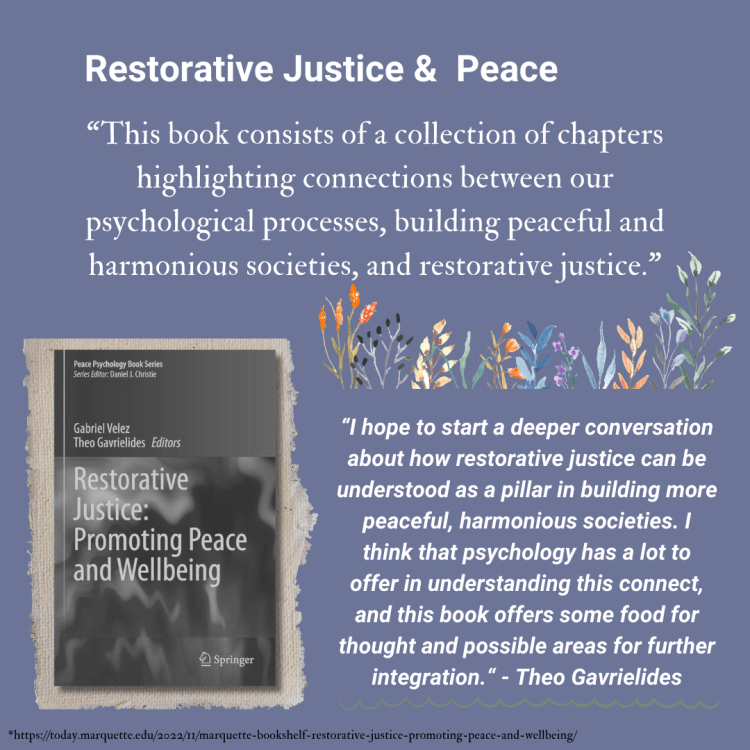
Restorative Justice & Peace
“This book consists of a collection of chapters highlighting connections between our psychological processes, building peaceful and harmonious societies, and restorative justice.”
“I hope to start a deeper conversation about how restorative justice can be understood as a pillar in building more peaceful, harmonious societies. I think that psychology has a lot to offer in understanding this connect, and this book offers some food for thought and possible areas for further integration.“ – Theo Gavrielides – Theo Gavrielides




Book Chapters


Restorative Justice (RJ)
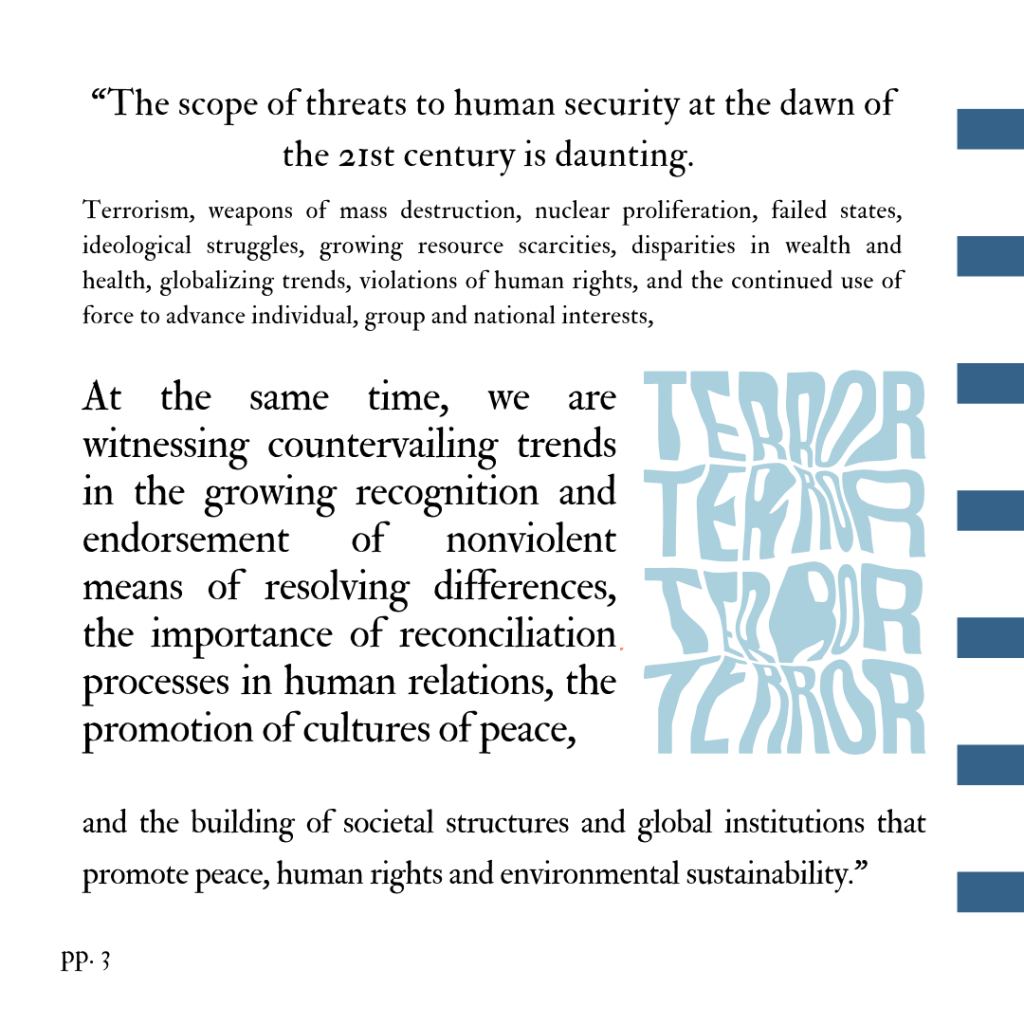
“The scope of threats to human security at the dawn of the 21st century is daunting. Terrorism, weapons of mass destruction, nuclear proliferation, failed states, ideological struggles, growing resource scarcities, disparities in wealth and health, globalizing trends, violations of human rights, and the continued use of force to advance individual, group and national interests. At the same time, we are witnessing countervailing trends in the growing recognition and endorsement of nonviolent means of resolving differences, the importance of reconciliation processes in human relations, the promotion of cultures of peace, and the building of societal structures and global institutions that promote peace, human rights and environmental sustainability.”
3 Key Ideas of RJ
- 1. When a wrongful act takes place, not only is the person who is directly harmed affected, but a ripple effect reaches the surrounding community. To this end, holistic restoration across multiple individuals and relationships is necessary.
- The person who caused harm has an obligation to make amends with both those they directly harmed and the wider community.
- The importance of healing, which is the process of unburdening the pain experienced in the context of the harm done. The healing itself holds transformative power. Rather than retribution, the purpose of restorative justice is transformation for the person who was harmed, the person who caused the harm, and the relationships between them and their community.
“The “victim-offender overlap” is a well-known phenomenon in criminology and violence against women.”
“Those who harm others often harmed themselves previously, and those who have been harmed can go on to harm others.”
“Healing that occurs from restorative processes and education can help break this cycle.”
How does harm repairing look like?
A common example is a situation where one has spoken harsh words to a loved one.
Restorative justice goes deeper than saying “sorry”. It means thinking seriously about actions that can repair some of the damage, such as telling the person how much they are loved and putting the harsh words in the context of a moment of anger.
This involves putting away ‘selfism’ and centering on the relational meaning of what has happened. In other words, addressing the relational impacts and taking action to heal them demonstrate that the relationship is treasured and valued above the negative emotional outburst.
This can support healing and transformation for both the person who caused harm and the person who was harmed, which could intervene in cycles of direct violence (negative peace) or help build more harmonious interpersonal relations (e.g. a culture of peace)

“Forgiveness is a rational choice; it is not about forgetting or condoning the wrongdoing.
Rather, forgiveness is a hallmark of a self-actualized person who has achieved personal growth and development by transcending the feelings of hate, anger, and bitterness towards the offender and developing feelings of empathy, love, and compassion. Its benefits can thus be both for personal well-being and interpersonal relationships”
“When one can forgive oneself, it makes it easier to be compassionate and forgive others because there is an applied acceptance of human weakness to do wrong”
The key is to first develop a genuine love for oneself and an ability to forgive oneself even if this means going through a process of restorative pain.
Restoration may not be easy but can result in cleansing and transformation. Genuine and unconditional positive regard for self is the first step towards being able to have unconditional positive regard for others.
In turn, this inward-out movement can then make forgiveness that much easier, building both internal and external processes to foster the development of congruent, self-actualized, peaceful, and truly happy people and relationships.
 Transformative Justice Collective